
The Complete Budget Checklist for Waikato Home Builds
A Practical Guide for Families, Professionals & Lifestyle-Block Owners
Building a new home in the Waikato is an exciting milestone — but it’s also one of the biggest financial decisions most families will ever make.
Whether you’re building on a lifestyle block, replacing a character home, or creating your forever family home, understanding what actually goes into a build budget is critical to avoiding stress, surprises, and cost blowouts.
At MDB Homes, we believe clarity upfront creates confidence throughout the build. This guide breaks down every key cost area you should plan for when budgeting a Waikato home build — so you can make informed decisions from day one.
Why Build Budgets Often Go Wrong
Many homeowners focus only on the “house price” — without realising that a successful build budget includes far more than the structure itself.
Common budget pitfalls include:
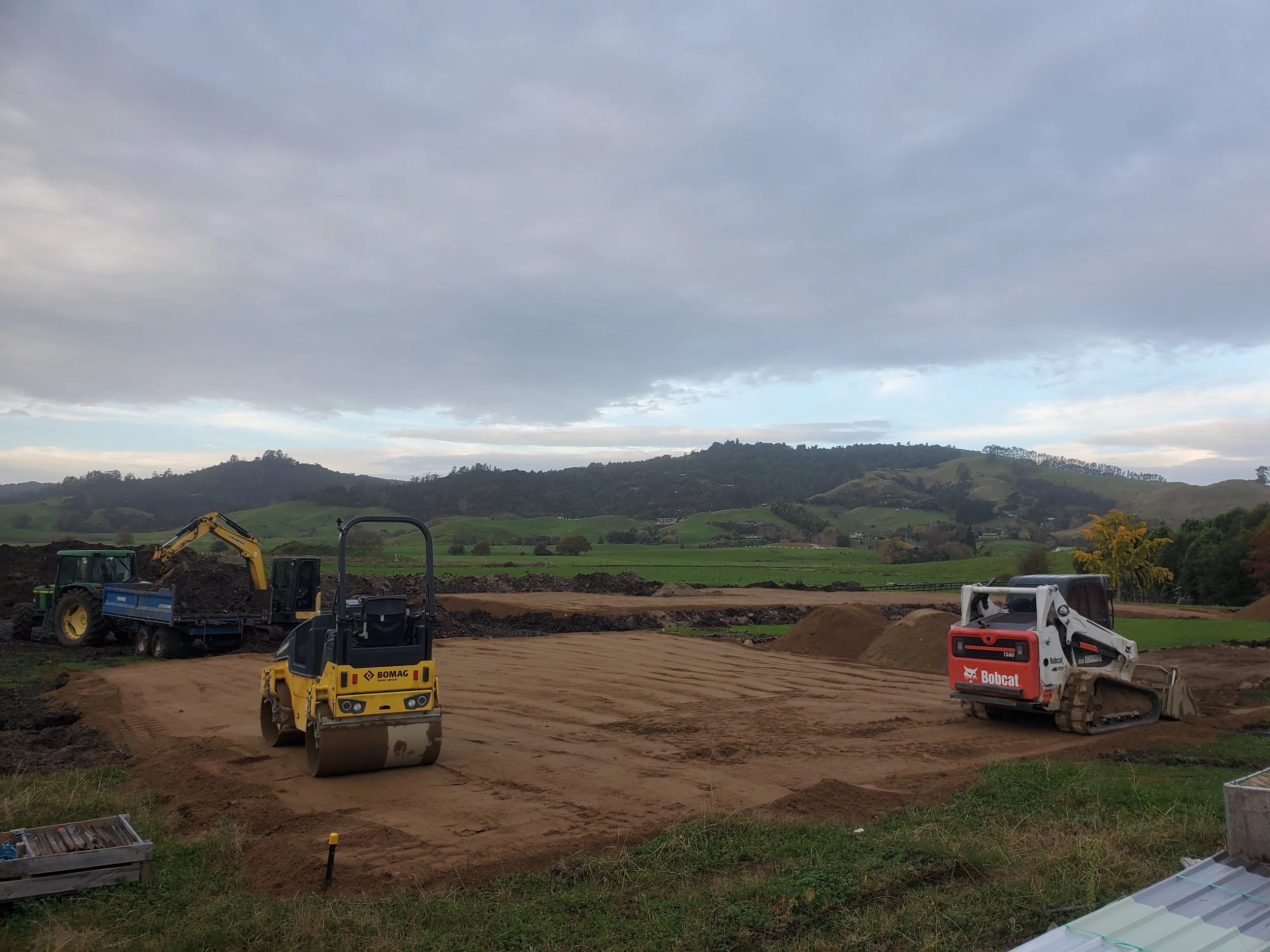
Underestimating site and groundworks
Not allowing for service connections on rural or lifestyle blocks
Confusion around Prime Cost (PC) items and Provisional Sums
Forgetting landscaping, driveways, and external works
Insufficient contingency planning
A good builder doesn’t just give you a number — they help you understand what’s included, what’s variable, and what’s realistic for your site and lifestyle.
The Complete Budget Checklist for Waikato Home Builds
1. Land & Pre-Build Costs
Before construction even begins, there are essential upfront costs to factor in:
Land purchase (if not already owned)
Geotechnical reports
Topographical surveys
Soil testing
Architect or designer fees
Engineering & consultant reports
Council consent and development contributions
👉 Tip: These costs vary significantly across the Waikato — especially between town sections and rural or sloping lifestyle blocks.
2. Site Preparation & Groundworks
This is one of the biggest variables in any Waikato build.
Include allowances for:
Excavation and earthworks
Site access and temporary driveways
Retaining walls
Drainage solutions
Foundation type (slab, rib-raft, piles)
Wind zone or seismic requirements
Lifestyle properties often require more detailed groundwork planning — something that must be addressed early, not guessed.
3. Structural Build Costs
This covers the core construction of your home:
Foundations and framing
Roofing and cladding
Windows and exterior doors
Insulation and weatherproofing
Internal linings and structural compliance
A detailed, transparent specification is critical here — vague allowances often lead to unexpected upgrades later.
4. Interior Finishes & Fixtures
This is where personal choice has a big impact on cost.
Budget for:
Kitchen cabinetry and benchtops
Bathroom fittings and tiling
Flooring (timber, tile, carpet, polished concrete)
Internal doors and hardware
Lighting and electrical fittings
Paint and wall finishes
👉 MDB Homes approach: We provide clear Prime Cost allowances and help clients understand what’s achievable within each range — before construction starts.
Prime Cost (PC) Items vs Provisional Sums: What You Need to Know
These two terms appear in almost every building contract — and they’re often misunderstood. Knowing the difference is essential for protecting your budget.
What Is a Prime Cost (PC) Item?
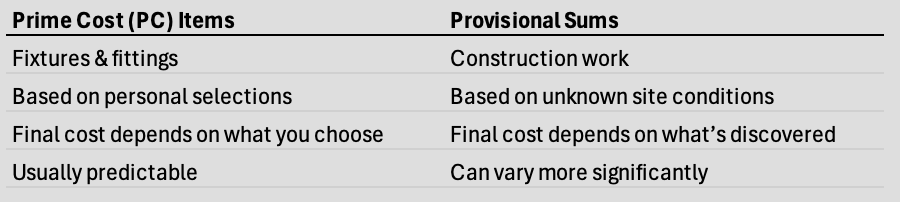
A Prime Cost (PC) item is an allowance for products or fixtures that haven’t been selected yet when the contract is signed.
PC items are typically things influenced by personal taste and specification level.
Common PC items include:
Toilets, taps, showers, and basins
Kitchen appliances
Light fittings
Door hardware
Vanity units
How PC items work:
A realistic dollar allowance is included in the contract
Once final selections are made, the actual cost is applied
If your selection costs more than the allowance, you pay the difference
If it costs less, you receive a credit
Key point: PC items relate to what you choose, not unknown construction work.
What Is a Provisional Sum?
A Provisional Sum is an allowance for work where the scope or cost can’t be fully confirmed upfront.
This is common when site conditions or underground services are unknown at contract stage.
Typical Provisional Sums include:
Excavation and earthworks
Ground conditions and foundations
Drainage and wastewater systems
Retaining walls
Service connections (especially on lifestyle blocks)
How Provisional Sums work:
The builder includes an estimate based on experience and available information
Once the work is completed and actual costs are known, the contract price is adjusted
Key point: Provisional Sums relate to uncertain work, not product choices.
PC Items vs Provisional Sums — At a Glance
Why This Matters for Your Budget
Quotes with unrealistically low PC allowances or large Provisional Sums can appear cheaper upfront — but often lead to unexpected costs later.
At MDB Homes, we:
Use realistic PC allowances based on how our clients actually build
Minimise Provisional Sums through early investigation
Explain every allowance clearly before contracts are signed
Track changes transparently throughout the build
This approach reduces stress, protects your budget, and keeps decision-making clear.
5. Services & Infrastructure (Especially Important for Lifestyle Blocks)
Many Waikato homes — particularly rural builds — require additional services planning.
Consider:
Power connections
Water supply (town, tank, or bore)
Wastewater systems
Stormwater management
Internet and smart-home wiring
6. Heating, Cooling & Energy Efficiency
Comfort and running costs matter — especially for family homes.
Include allowances for:
Heat pumps or ducted systems
Fireplaces or wood burners
Underfloor heating
High-performance glazing
Solar readiness
7. External Works & Landscaping
A home isn’t finished when the builder leaves site.
Plan for:
Driveways
Decks and patios
Fencing and gates
Planting and lawns
8. Professional Fees, Insurance & Compliance
Often overlooked but essential:
Builder’s insurance
Health and safety requirements
Code Compliance Certificate (CCC)
Warranties and guarantees
Every MDB Homes build is backed by our Nailed Down Guarantee and the Master Build 10-Year Guarantee.
Final Thoughts: Build with Confidence
A well-planned budget leads to:
Better decisions
Fewer surprises
Greater peace of mind
If you’re planning a Waikato home build or renovation, starting with a clear, realistic budget checklist is the smartest move you can make.
👉 Thinking about building or renovating?
Talk to MDB Homes and let’s build a home that truly complements your land and lifestyle.
Explore our services
Ready to Build or Renovate? Let’s Start the Conversation
If you’re planning a new build, renovation, or lifestyle block project in Cambridge, Hamilton, Te Awamutu, Matamata, or anywhere across the Waikato, talk to MDB Homes first. We’ll take the time to understand your vision, answer your questions, and provide the kind of clarity and confidence every homeowner deserves.
From the very first conversation, you’ll get expert guidance, transparent advice, and a team genuinely committed to building a home that complements your land and lifestyle.
Contact MDB Homes first and let’s chat about how we can help turn your ideas into something beautifully built — together.
We’ll help you start the journey right, with expert advice and honest conversations from day one.